Color Analysis: How It Works, In Person, Online and With AI
What color analysis is, what it measures, how draping works, and how AI color analysis from a photo compares: what it gets right, where it fails, and how to get a reliable result.

In this guide9 sectionsClose
Color analysis is a method for finding the colors that flatter your natural coloring: your skin, hair and eyes. The result is a palette you can use for clothes, makeup, hair color and jewelry, usually expressed as one of 12 seasons such as Soft Summer or Deep Autumn.
It works because colors next to your face change how your skin looks. The right ones make skin look even and eyes clear; the wrong ones add shadows, a grey or yellow cast, or make the color look like it's wearing you. Color analysis is just a structured way of finding out which is which.
What color analysis measures
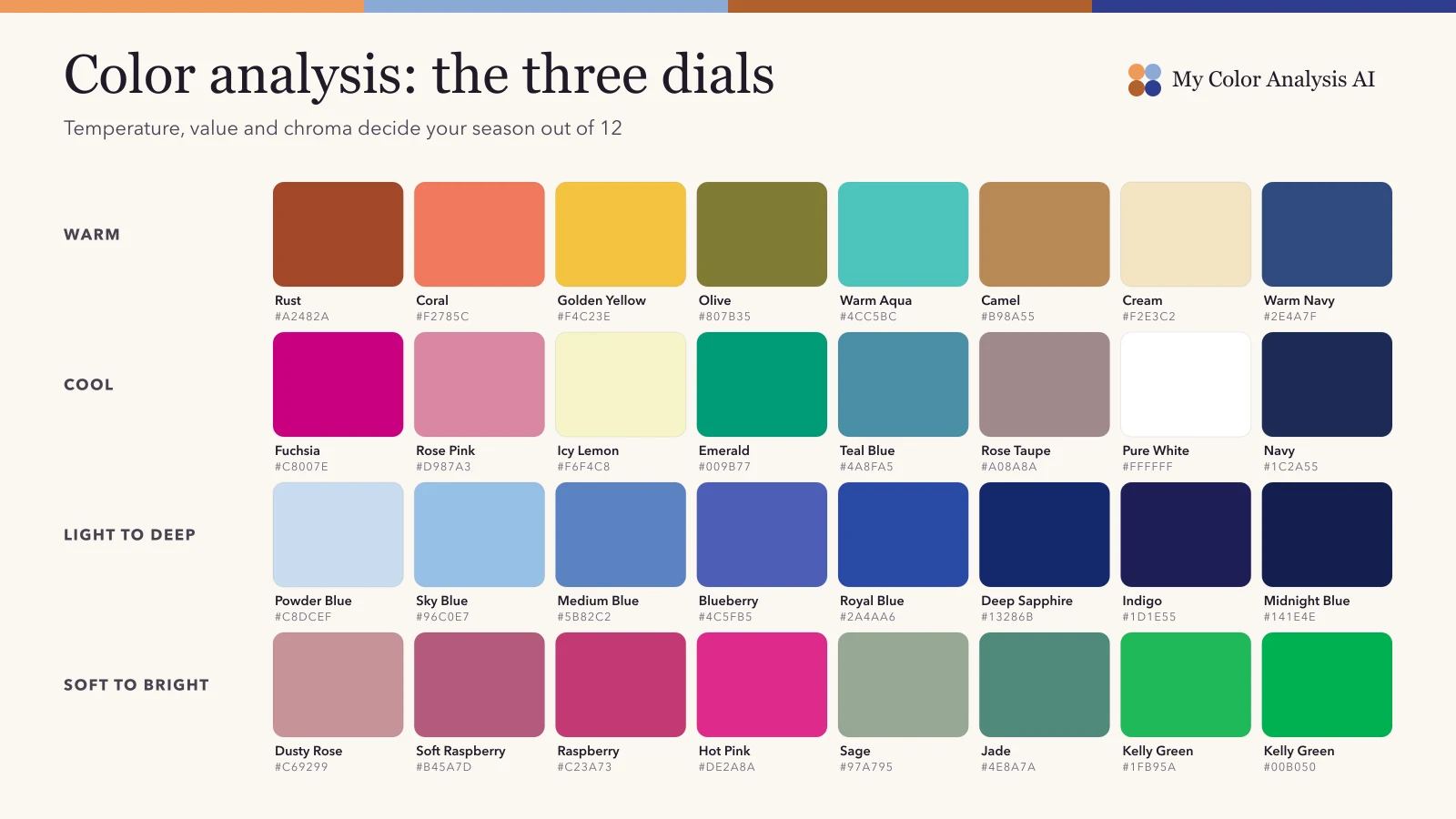
Every modern system looks at the same three qualities, plus contrast:
| Quality | Question | Range |
|---|---|---|
| Temperature (undertone) | Is your coloring golden or pink-blue? | Warm, neutral, cool |
| Value (depth) | How light or dark is your coloring overall? | Light, medium, deep |
| Chroma (clarity) | Do you suit clear, saturated colors or soft, greyed ones? | Bright, medium, soft |
| Contrast | How different are your hair, skin and eyes? | Low, medium, high |
Your season is defined by your strongest quality and your second one. A Light Summer is light first, cool second. A Bright Spring is bright first, warm second. A True Winter is cool first, with bright colors and high contrast.
The 12 seasons
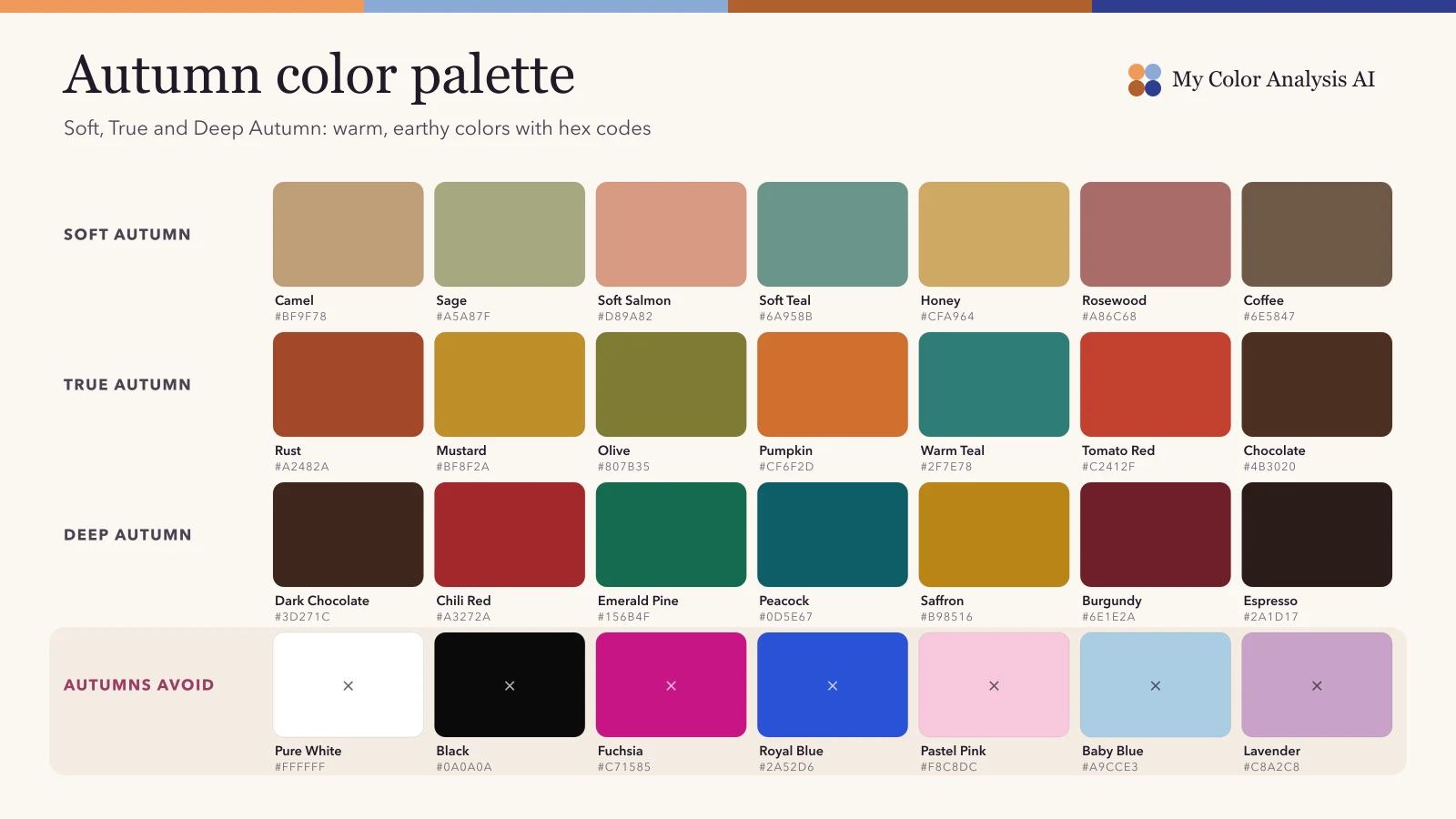
The original four-season system (Spring, Summer, Autumn, Winter) assumed everyone is clearly warm or cool. The 12-season system adds depth and chroma, so each family splits into three. This is the system our analysis and our palettes use.
The 12 seasons of color analysis
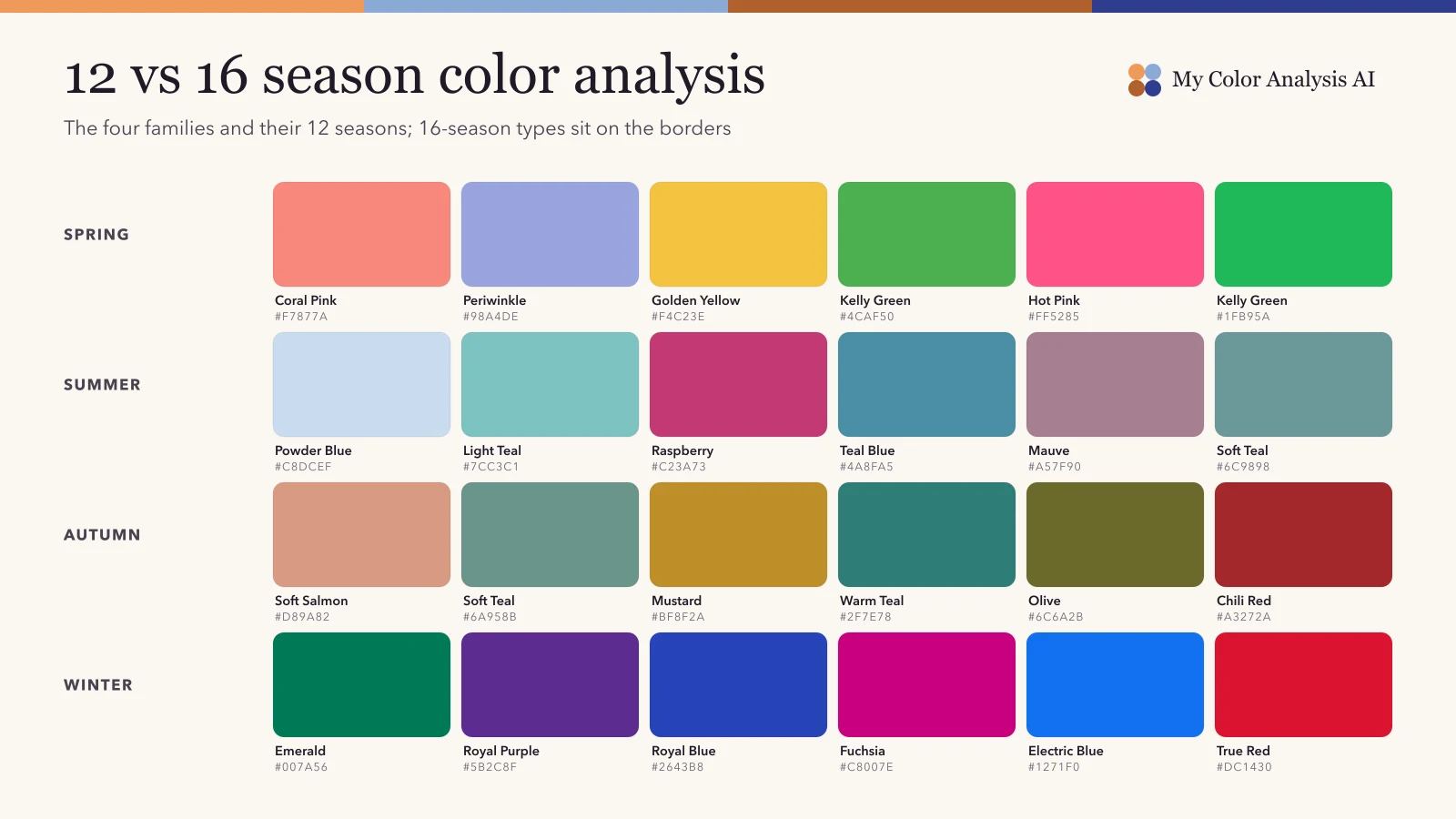
There are also 16-season systems, which add a fourth type per family. They don't share one standard; we compare them in 12 vs 16 season color analysis.
How in-person color analysis works
A traditional session is built around draping: large pieces of colored fabric held under your face, two at a time.
- Neutral setup. Daylight or full-spectrum lighting, no makeup, hair covered or pulled back, a grey or white cape over your clothes so nothing else adds color.
- Temperature drapes. Warm vs cool versions of the same color (gold vs silver lamé, coral vs fuchsia). This splits the warm families from the cool ones.
- Depth and chroma drapes. Light vs deep, bright vs soft, inside the winning side.
- Season drapes. Full sets of each candidate season compared against each other until one wins.
- Palette and advice. You usually leave with a fabric swatch book and advice on makeup, hair and wardrobe.
What the analyst watches is the same thing you'd watch at home: does the skin even out, do the eyes clear, do shadows under the eyes and around the mouth soften or deepen.
Here's what a draping comparison looks like on one face:
Same face, same light, two colors
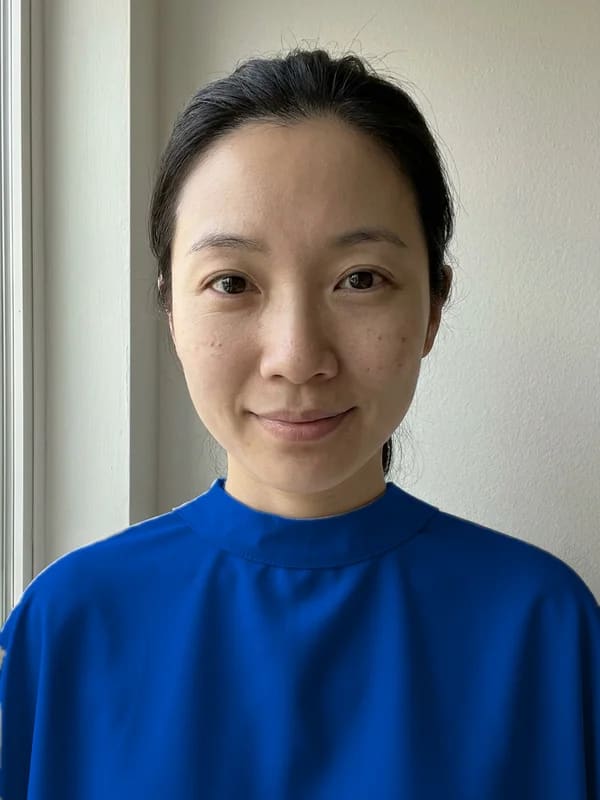
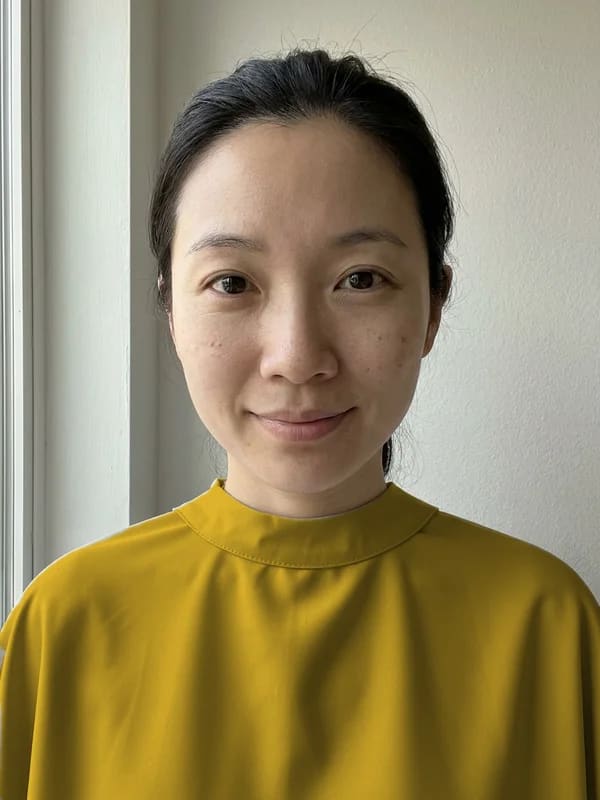
AI-generated demo model, not a real person or customer. Cobalt keeps her skin clear and her features defined; mustard and camel make the same skin look sallow.
How online and AI color analysis works
Online analysis replaces the fabric with a photo. The approaches range from questionnaires to full photo analysis:
- Quizzes ask about your hair, eyes, skin and reactions to colors. Fast, but you're describing yourself, and most people misjudge their own chroma and contrast. Our color analysis quiz is a reasonable first estimate.
- Photo analysis measures the actual colors of your skin, hair and eyes from a selfie and classifies them into a season.
- Virtual draping recolors clothing or a cape on your photo so you can compare colors on your own face, the closest thing to a real drape.
The best online results combine the last two: measure, shortlist the closest seasons, then compare them visually.
Where AI color analysis fails
A photo is only as honest as its light. The usual problems:
| Problem | What it does | Fix |
|---|---|---|
| Warm indoor light | Pushes everyone warm | Face a window in daylight, lamps off |
| Direct sun or harsh flash | Blows out skin, flattens depth | Soft, indirect daylight |
| Camera white balance | Phones shift color to "look nice" | Wear a white or light top as a reference |
| Beauty filters and portrait modes | Smooth and recolor skin | Turn them off |
| Makeup | Changes undertone on purpose | Bare face or minimal |
| Dyed hair | Misleads depth and temperature | Note your natural color, or cover it |
| Your screen | Shows colors differently from the next screen | Compare pairs on the same screen, not absolute colors |
None of this makes photo analysis useless. It means the method needs to check the photo and correct for light, and the result needs a visual comparison, not just a label.
How our analysis works
Our free analysis follows the in-person logic on your selfie:
- Photo check. We guide you to a window and check the light before going further. A white or light top is used as a color reference to correct your camera.
- Measurement. Your skin, hair and eye colors are measured from the photo.
- Shortlist. Those measurements place you among the 12 seasons and pick the closest candidates.
- Draping. A neutral cape is placed on your photo and recolored with each candidate's colors, so the comparison is on your own face, with only the cape color changing.
- Result. Your season, its palette, the colors to avoid. The result is free; a full report with makeup, hair and wardrobe is optional.
You can try the draping part right now with any season:
Compare 4 seasons on your own photo
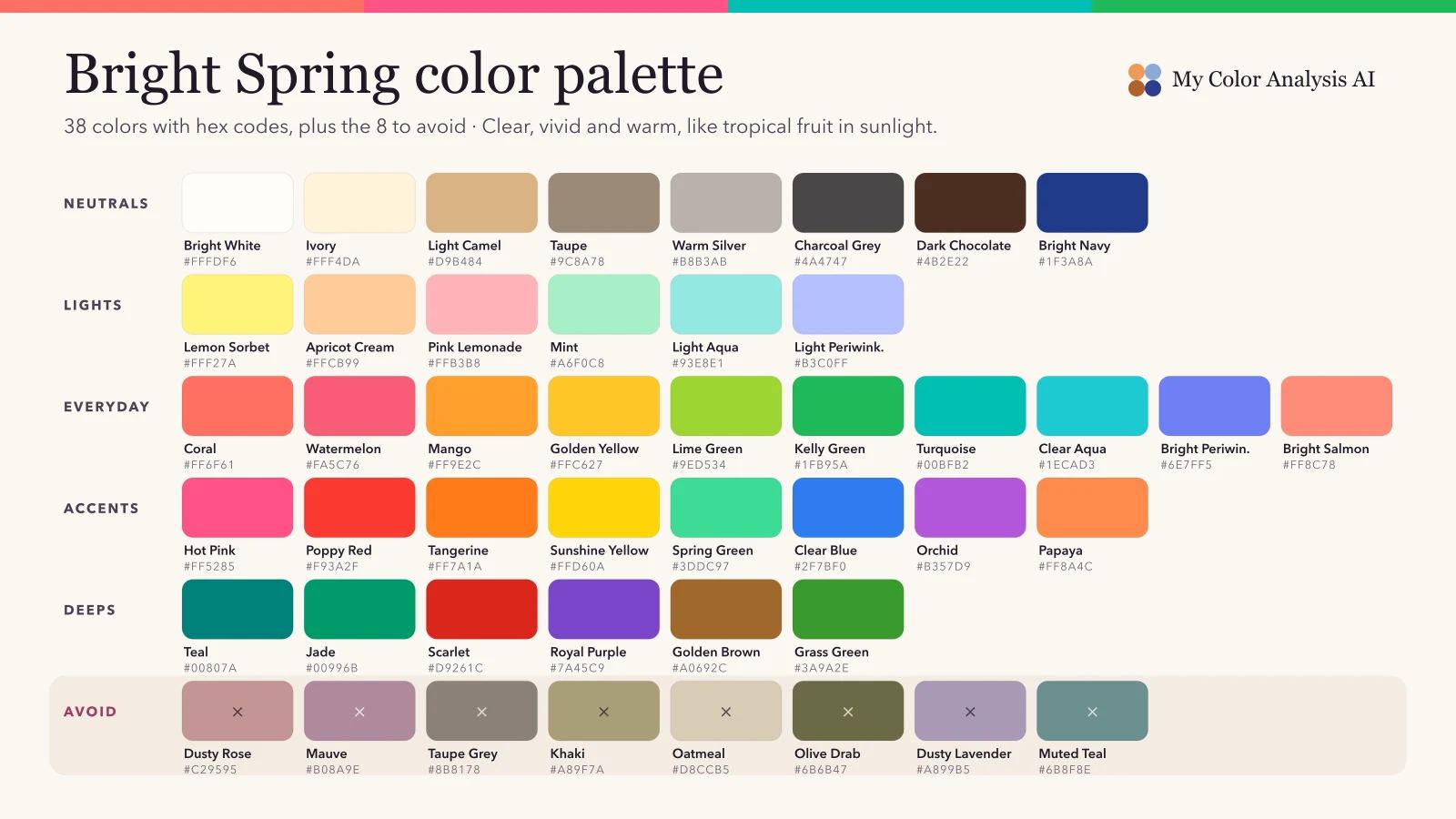
True Spring · True Summer · True Autumn · True Winter
Take a selfie or upload one. We put a draping cape on your photo and recolor it with this palette, best colors and the ones to avoid, so you can see the difference on your own face. Your photo stays in your browser.
Color analysis at home
You can get surprisingly far with daylight, a mirror and a few solid T-shirts:
- Compare cream vs pure white and gold vs silver for temperature.
- Compare pastel vs dark versions of one color for depth.
- Compare kelly green vs sage or hot pink vs dusty rose for chroma.
- Take a black and white selfie to judge contrast.
Our step-by-step guide what colors look best on me walks through each test with swatches, and the free tools measure each quality from a selfie: undertone test, contrast test, gold or silver test and online color draping.
Which type of color analysis should you choose?
| Method | Strength | Weakness | Best for |
|---|---|---|---|
| In-person with an analyst | Real fabric, controlled light, expert eye | Most expensive, needs an appointment | People who want a swatch book and a full session |
| Virtual with an analyst | Expert eye, from home | Depends on your photos and their light | Those without a local analyst |
| AI analysis from a photo | Fast, free or low cost, repeatable | Sensitive to light and camera | A reliable first answer, then checking it on your face |
| Quiz | Fastest | Self-description is often wrong | A rough starting point |
| DIY draping at home | Free, real fabric | Hard to judge yourself objectively | Confirming a result |
Whichever you choose, the same rule applies: trust comparisons on your face over labels.
What to do with your result
- Wardrobe: replace your darkest and lightest neutrals first (your black, white and navy), then add signature colors. Each season guide has a 10-piece capsule.
- Makeup: foundation undertone first, then lips and blush from your palette.
- Hair: stay within your temperature and close to your natural depth.
- Jewelry: see what color jewelry should I wear.
- Shopping: copy your palette's hex codes into shop color filters, or check a garment with does this color suit me.
Color analysis FAQ
Is AI color analysis accurate?
It can be, if the photo is taken in good daylight, without filters or makeup, and the method corrects for your camera's colors. It's least reliable under indoor light. Results are most trustworthy when they're checked with a visual draping comparison on your own photo.
Can you do color analysis from a photo?
Yes. The photo needs soft daylight on your face, no filters, a bare face and ideally a white top as a color reference. Avoid old photos, photos taken indoors at night and anything edited.
What is the difference between undertone and color season?
Undertone is one of the qualities that decide your season. Your season also accounts for depth, chroma and contrast. Two people with the same warm undertone can be True Spring and Soft Autumn.
Is color analysis worth it?
If you buy clothes or makeup regularly, knowing your colors mostly saves money: fewer pieces that look great in the shop and wrong at home. It's also the fastest way to make a small wardrobe mix and match.
Do I need to know my season to dress well?
No, but it makes choices faster. Knowing your best neutrals and your two or three best colors already covers most of a wardrobe.
Graduated from the ESSEC Business School, Natalie is a marketing expert specializing in beauty tech.